


 How to
Use
How to
Use


- Health & Beauty Protective Items Health & Medical Beauty & Personal Care
- Bags, Shoes & Accessories Luggage, Bags & Cases Shoes & Accessories
- Apparel, Textiles & Accessories Apparel Textile & Leather Product Fashion Accessories Timepieces, Jewelry, Eyewear
- Electronics Industrial Computer & Accessories Home Appliance Consumer Electronic Security & Protection
- Electronic Equipment, Component & Telecoms Electronic Equipment & Supplies Telecommunication
- Home, Lights & Construction Construction & Real Estate Home & Garden Lights & Lighting Furniture
- Gifts, Sports & Toys Gifts & Crafts Toys & Hobbies Sports & Entertainment
- Agriculture & Food Agriculture Food & Beverage
- Auto & Transportation Automobiles & Motorcycles Transportation
- Machinery, Industrial Parts & Tools Machinery Industrial Parts & Fabrication Services Tools Hardware Measurement & Analysis Instruments
- Metallurgy, Chemicals, Rubber & Plastics Minerals & Metallurgy Chemicals Rubber & Plastics Energy Environment
- Packaging, Advertising & Office Packaging & Printing Office & School Supplies Service Equipment
- K-Service Innotech Contents ICT Technology/Engineering
- ETC ETC




ITEM SPECIFICS
-
Brand
Model Wind Tunnel Test for BuildingsTESolution
-
origin
Republic of Korea
-
Size(Capacity)
Customized product
-
Function
Understanding the aerodynamic characteristics of buildings using wind tunnels
-
Material
Steel
-
Style
-
-
Expiry Date
Semi-permanent
PRODUCT DESCRIPTION
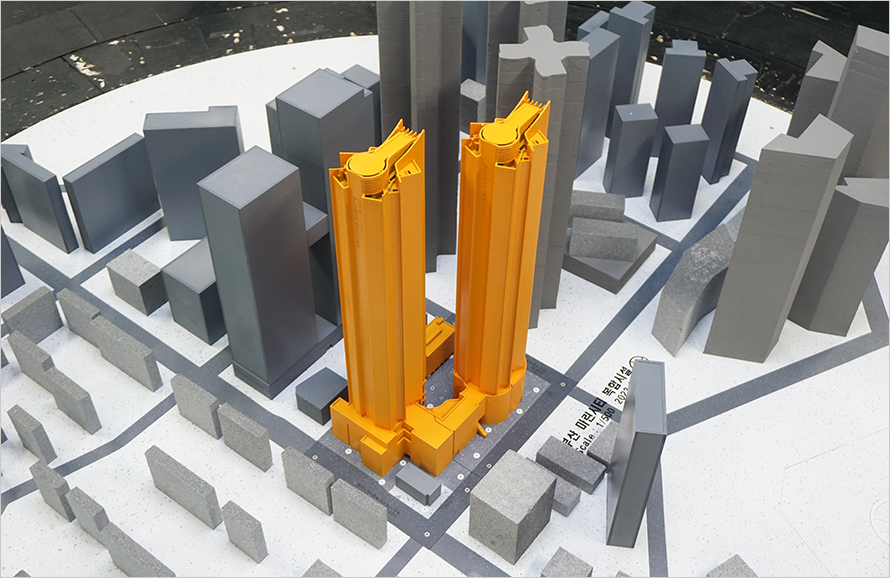
Wind Tunnel Test for Buildings
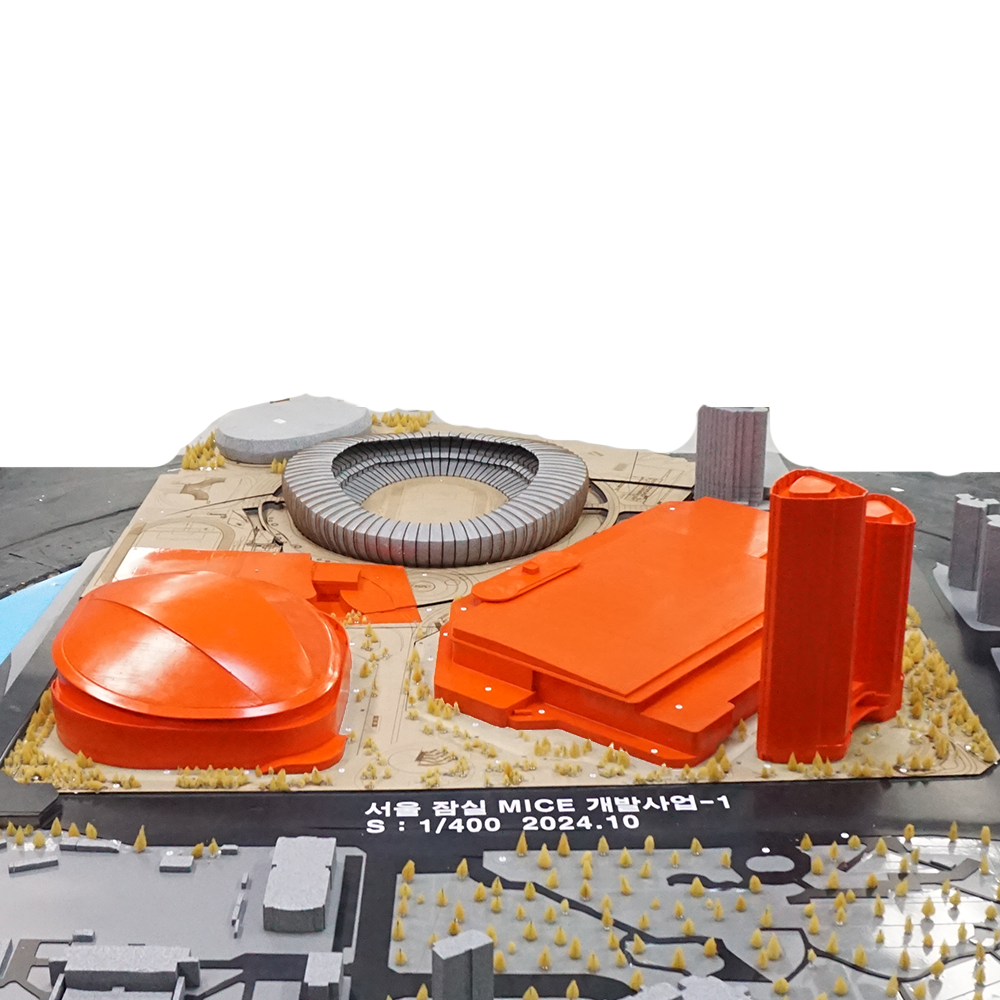
Our architectural wind tunnel testing services are broadly classified into five major types, detailed below along with their primary objectives and scopes.
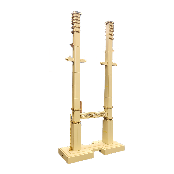
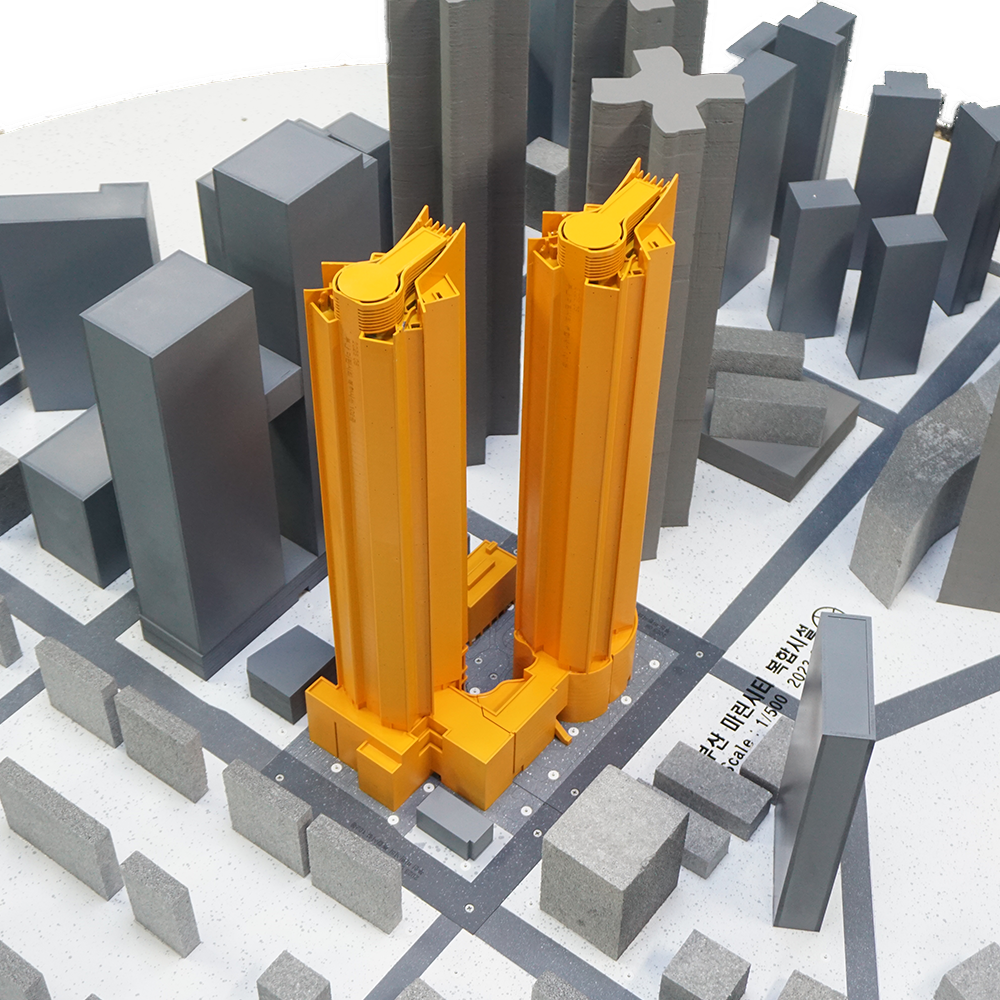
1. High-Frequency Base Balance (HFBB) Test / Force Balance Test
· Objective :
Conducted to evaluate the design wind loads for structural x-frames, wind-induced vibrational displacement, and serviceability based on wind-induced acceleration.
· Scope :
A rigid model characterized by its lightweight and high stiffness is utilized. The wind forces (forces and moments acting along each structural axis) exerted on the rigid model are measured using a 6-component force balance. Wind force coefficients are derived from the time-series data of these measured forces. Spectral modal analysis is then employed to evaluate the wind response, including both mean and fluctuating components.
· Key Deliverables :
Base shear force, overturning moment, torsional moment, story wind loads, wind-induced acceleration, etc.
2. Wind Pressure Test
· Objective :
Conducted generally to evaluate design wind loads for building cladding and components, as well as roof structure wind loads for large-span configurations like stadiums.
· Scope :
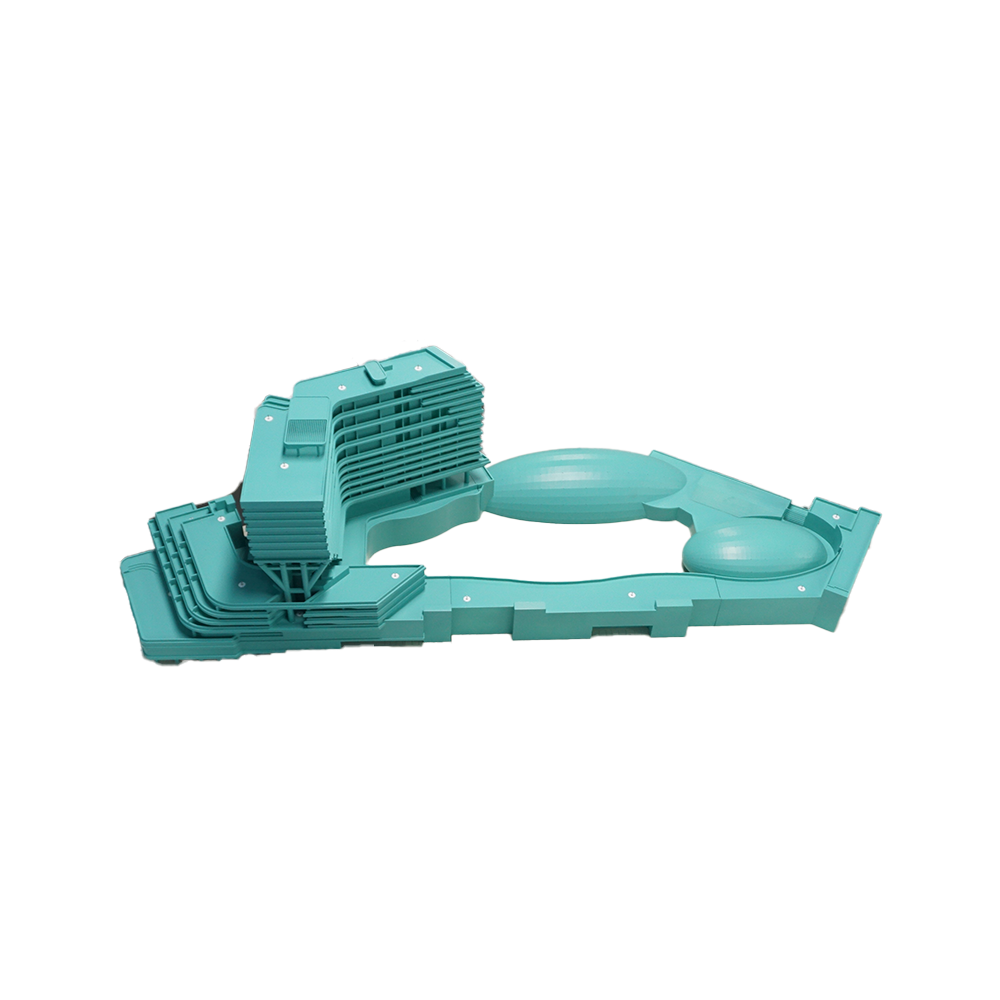
Localized wind pressures acting on a rigid model are measured through pressure taps and tubing connected to a multi-point pressure measurement system. The design wind pressure is determined by evaluating external pressure coefficients (mean, RMS, and peak values) from the time-series pressure data. Since localized wind pressures are highly sensitive to the geometric fidelity of the test model, precise detailing during model fabrication is critical. Special attention is also given to calibrating the pressure transfer characteristics within the tubing. Additionally, this test evaluates design wind loads for open structural components such as parapets and canopies. Equivalent structural wind load results can also be derived through the wind pressure integration method.
· Key Deliverables :
Wind loads for cladding design, wind loads for roof structure design, etc.
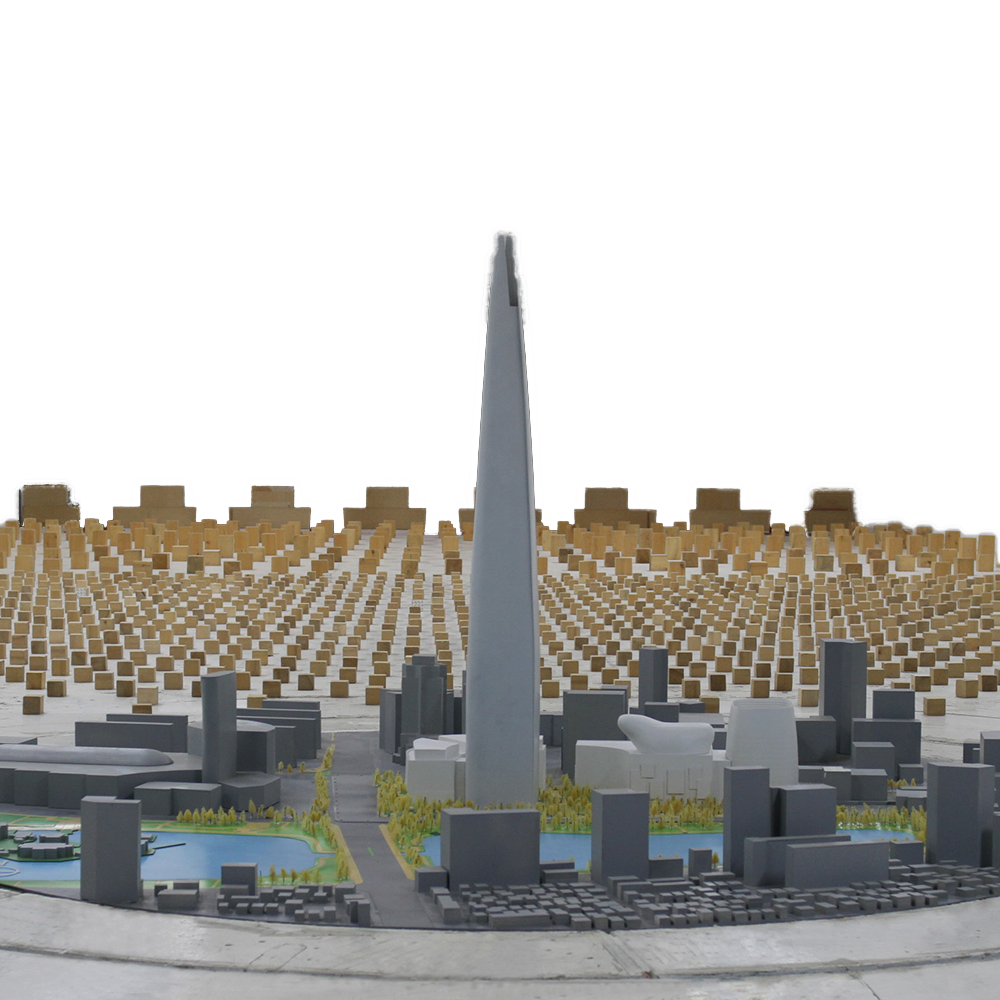
3. Pedestrian Wind Environment Test
· Objective :
The construction of tall buildings alters surrounding airflow patterns, often creating unexpected currents at varying wind speeds. This test assesses the comfort and safety of pedestrian spaces in the immediate vicinity of the building.
· Scope :
Newly erected tall structures often generate areas with unexpectedly high wind speeds or, conversely, pockets of stagnant air. High-velocity zones can compromise the comfort and safety of building occupants and surrounding pedestrians. Stagnant zones, on the other hand, can lead to poor ventilation and air circulation. Pedestrian spaces around a building must maintain a wind environment appropriate for their intended use (e.g., outdoor dining, benches, street malls, plazas) while ensuring pedestrian safety against strong winds. Typically, the pedestrian wind environment is evaluated through a probabilistic approach, correlating the frequency of wind directions and speeds from local meteorological data with the wind speed ratios determined during the tunnel test.
· Key Deliverables :
Frequency of wind direction and speed in the surrounding area, pedestrian wind environment comfort/safety evaluation, etc.
4. Aeroelastic Model Test
· Objective :
Conducted to evaluate design wind loads for structural x-frames and to verify the occurrence of aerodynamic instabilities—such as vortex-induced vibrations (VIV) and aerodynamic flutter—within the target wind speed range.
· Scope :
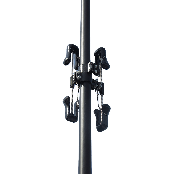
This test utilizes an elastic model capable of vibrating similarly to the actual building by simulating its dynamic properties (mass, natural frequency, damping, mode shapes, etc.). The displacements or accelerations of the model as it responds to wind excitation are measured using non-contact displacement meters (laser or optical sensors) or accelerometers. Structural x-frame design wind loads are then evaluated from this time-series data. The aeroelastic model test successfully captures the wind response by incorporating coupled mode effects, aeroelastic forces induced by structural motion, and aerodynamic damping.
· Key Deliverables :
Mean and fluctuating wind force coefficients, base/story shear force, base/story overturning moment, base/story torsional moment, etc.
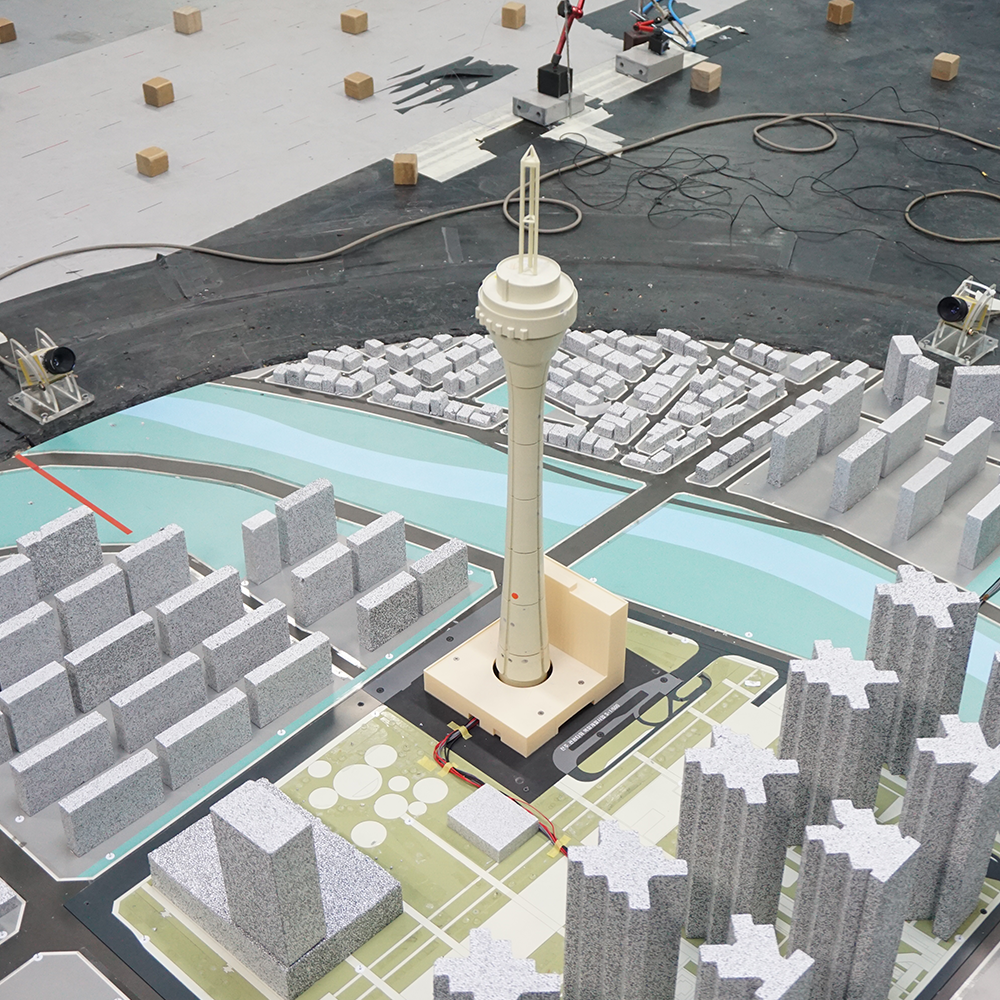
5. Topography Model Test
· Objective :
Primarily conducted to evaluate the characteristics of wind direction and wind speed as influenced by macro-topography and surrounding terrain features.
· Scope :
A scaled model of the target terrain is fabricated, and the distribution of wind speed and turbulence intensity is measured using an anemometry system (such as hot-wire anemometers or cobra probes). By analyzing the approach flow traveling toward the construction site using these measurements, the specific engineering impacts of the topography are evaluated.
· Key Deliverables :
Vertical and horizontal profiles of mean wind speed and turbulence intensity, topographic factor, etc.
About Us
Our compnay was established in February 2001, with the goal to provide greater life to our clients through our accurate evaluation of safety and serviceability of various structures and our solutions to improve them, based on our differentiated technical expertise and accumulated experience in the field of Wind Engineering and Vibration Control.
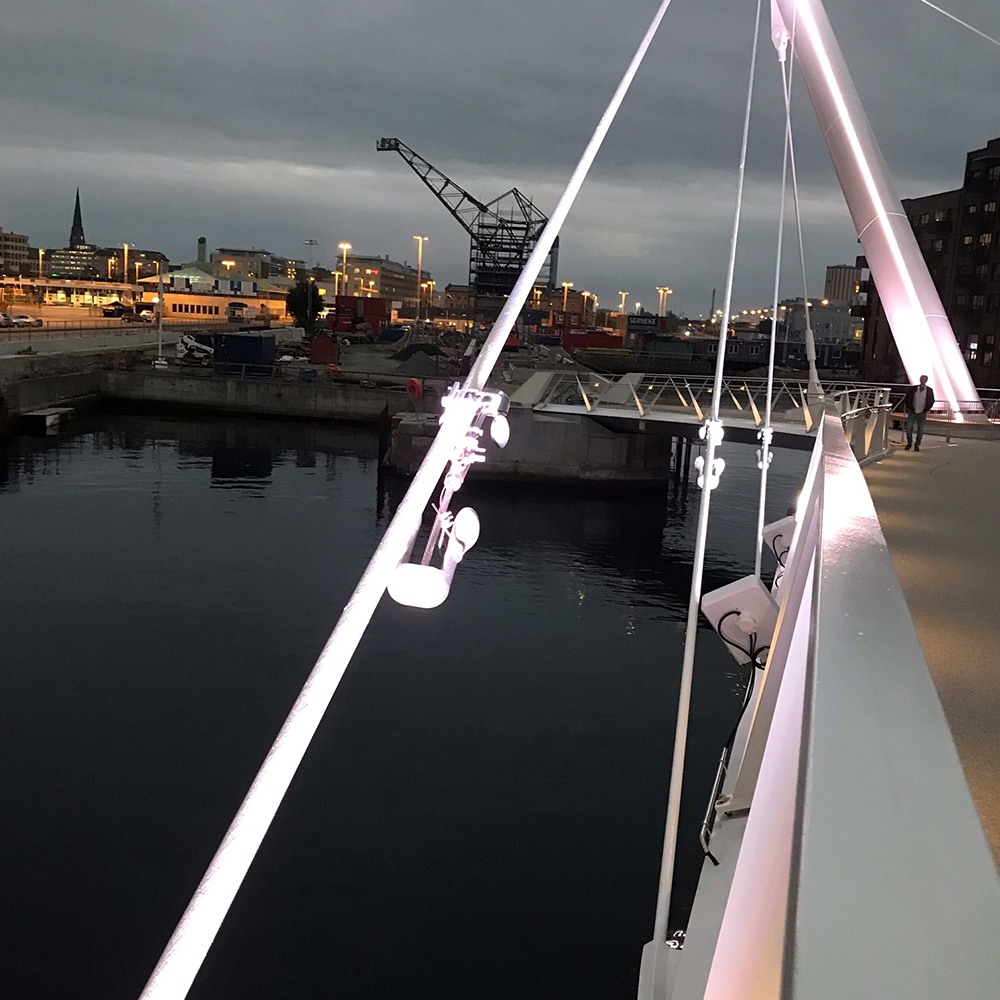
As to the field of Wind Engineering, TESolution provides solutions for safer and better life with evaluation on serviceability of buildings and bridges through wind resistance stability tests and wind induced vibration tests, and evaluation on wind environment through wind environment assessment techniques, all based on our highest level of expertise and technically advanced wind test facilities.
As to the field of Vibration Control, TE Solution provides solutions to improve the quality of living environment through our vibration control devices that reduce or suppress the vibration occurred from wind load, seismic load, or traffic load on various structures.
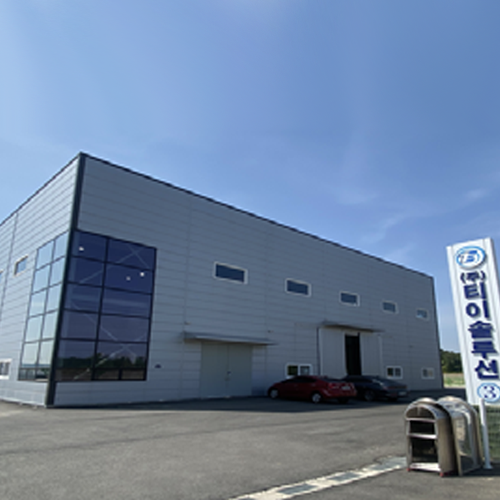
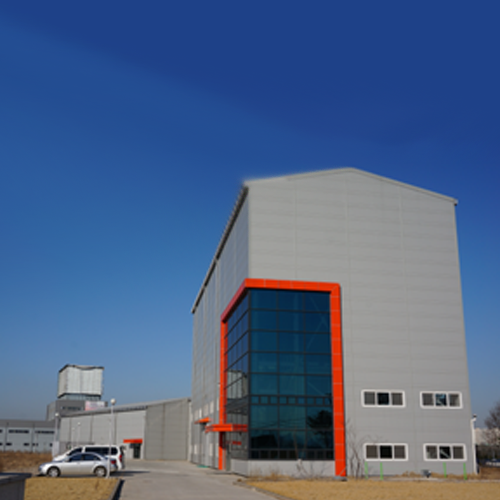
With the support of our clients we were able to launch our subsidiary, TE Solution has established its company building with Mid-sized 2D Wind Tunnel that is bigger than that of TE
Solution’s. Also, our vibration control technology has been gaining recognition internationally, and the number of our projects in Southeast Asia, East Asia, and Europe have been steadily increasing.
We thank our customers again for your continuous support, and we promise our very best to provide satisfactory results through our highest technical expertise and continuous R&D efforts.
As to the field of Wind Engineering, TESolution provides solutions for safer and better life with evaluation on serviceability of buildings and bridges through wind resistance stability tests and wind induced vibration tests, and evaluation on wind environment through wind environment assessment techniques, all based on our highest level of expertise and technically advanced wind test facilities.
As to the field of Vibration Control, TE Solution provides solutions to improve the quality of living environment through our vibration control devices that reduce or suppress the vibration occurred from wind load, seismic load, or traffic load on various structures.
With the support of our clients we were able to launch our subsidiary, TE Solution has established its company building with Mid-sized 2D Wind Tunnel that is bigger than that of TE
Solution’s. Also, our vibration control technology has been gaining recognition internationally, and the number of our projects in Southeast Asia, East Asia, and Europe have been steadily increasing.
We thank our customers again for your continuous support, and we promise our very best to provide satisfactory results through our highest technical expertise and continuous R&D efforts.
Other Products
R&D CERTIFICATE
-
- ISO14001
- Korea Employers' Federation Certification Register
- 2025.09.26
- 인증서보기
-
- ISO9001
- Korea Employers' Federation Certification Register
- 2025.09.26
- 인증서보기
-
- ISO45001
- Certification Partner Global
- 2025.03.26
- 인증서보기
-
- Certificate of Inno-Biz
- Minisry of SMEs and Startups
- 2026.12.09
- 인증서보기
-
- Certificate of Product-Specific Approved Exporter
- Korea Customs Service
- 2025.08.11
- 인증서보기
PAYMENTS DETAILS
This supplier supports payments for offline orders
- Telegraphic Transfer : T/T
- Name : YOUN SEOK KIM
SHIPPING
Shipping from :
Republic of Korea
- 142 Seungjin-gil Gongdo-eup, Anseong-si, Gyeonggi-do (17563)
TESolution Co., Ltd.
The person in charge
Youn Seok KimAddress
142 Seungjin-gil Gongdo-eup, Anseong-si, Gyeonggi-do (17563)
Introduction
Our compnay was established in February 2001, with the goal to provide greater life to our clients through our accurate evaluation of safety and serviceability of various structures and our solutions to improve them, based on our differentiated technical expertise and accumulated experience in the field of Wind Engineering and Vibration Control.
As to the field of Wind Engineering, TESolution provides solutions for safer and better life with evaluation on serviceability of buildings and bridges through wind resistance stability tests and wind induced vibration tests, and evaluation on wind environment through wind environment assessment techniques, all based on our highest level of expertise and technically advanced wind test facilities.
As to the field of Vibration Control, TE Solution provides solutions to improve the quality of living environment through our vibration control devices that reduce or suppress the vibration occurred from wind load, seismic load, or traffic load on various structures.
With the support of our clients we were able to launch our subsidiary, TE Solution has established its company building with Mid-sized 2D Wind Tunnel that is bigger than that of TE Solution’s. Also, our vibration control technology has been gaining recognition internationally, and the number of our projects in Southeast Asia, East Asia, and Europe have been steadily increasing.
We thank our customers again for your continuous support, and we promise our very best to provide satisfactory results through our highest technical expertise and continuous R&D efforts.
-
- Business Type :
- Manufacturer
-
- Main Product :
- Wind Tunnel Test for Bridges
-
- Established :
- 2001-02-01
-
- Total Annual Revenue :
- Less than 100 million (KRW)
-
- Total Employees :
- 11~50 people
R&D CERTIFICATE
-
- ISO14001
- Korea Employers' Federation Certification Register
- 2025.09.26
- 인증서보기
-
- ISO9001
- Korea Employers' Federation Certification Register
- 2025.09.26
- 인증서보기
-
- ISO45001
- Certification Partner Global
- 2025.03.26
- 인증서보기
-
- Certificate of Inno-Biz
- Minisry of SMEs and Startups
- 2026.12.09
- 인증서보기
-
- Certificate of Product-Specific Approved Exporter
- Korea Customs Service
- 2025.08.11
- 인증서보기
COMPANY ENVIRONMENT
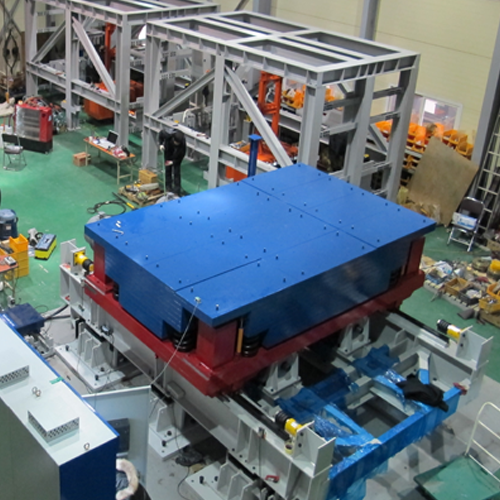
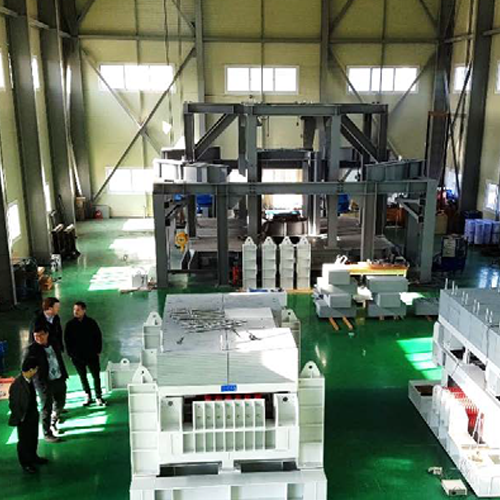
Please suggest a variety of your ideas such as design, impact, enhancements, etc
Captcha Required
Please enter the text on the left image to prevent automatic input.
0 / 4000
질문이 없습니다.
CUSTOMER REVIEWS (0)

TRADE EXPERIENCE
-
- Total revenue
- Less than 100 million (KRW)
-
- Total export revenue (previous year in USD)
- 65
-
- Number of foreign trade employees
- 11~50 people
COMPARISON TO SIMILAR ITEMS more
- No Items
- supplier level
-
 SILVER
- TESolution Co., Ltd. Seller's Store
- Seller's Store url
- Response Level
★ ★ ★ ★ ★

- Supplier Level
★ ★ ★ ★ ★
- Transaction Level
★ ★ ★ ★ ★
SUPPLIER BEST